
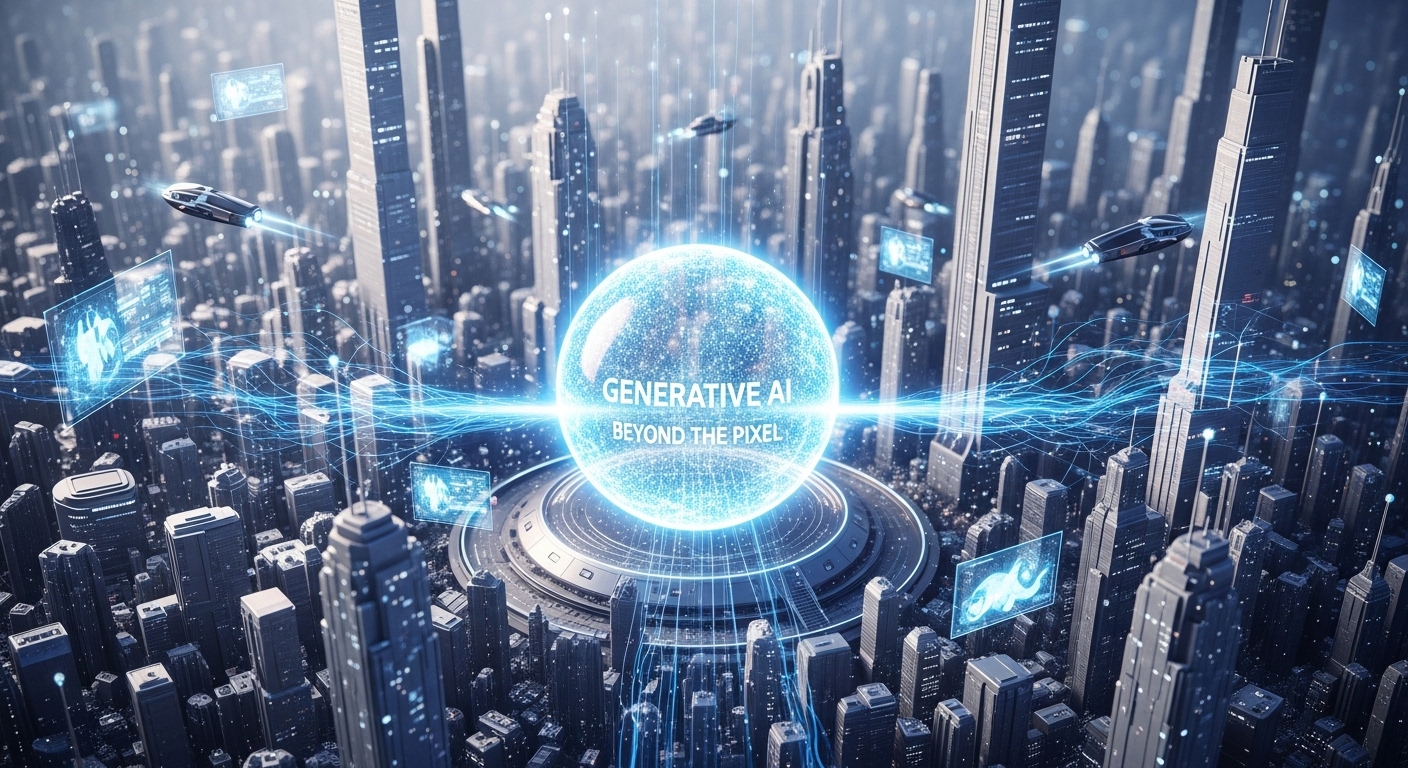
Beyond the Pixel: Mastering Typographic Integration in Generated Imagery
For years, a persistent and often mocked failure of AI image generators has been their inability to render coherent, correctly spelled text. Users attempting to create posters, logos, or memes were met with a frustrating jumble of garbled, nonsensical characters that resembled language but carried no meaning. This single flaw rendered these tools largely unusable for the vast majority of commercial applications, where text is not an afterthought but a critical component of the message. The successful integration of reliable typography directly within the image generation process is a watershed moment, unlocking a massive range of practical use cases in marketing, advertising, and graphic design.
A Breakthrough in Legibility and Context
The core breakthrough is the AI’s ability to interpret a string of text within a prompt and render it accurately as part of the generated image. The demonstration of creating a wooden sign that clearly and correctly displays the text “Welcome to AI land” is a powerful proof point of this new capability “. The significance of this extends beyond mere spelling. The AI also demonstrates a contextual understanding of how the text should be integrated into the scene. It doesn’t simply overlay the text in a generic font; it renders it as if it were part of the object itself, in this case, appearing carved or painted onto the wooden sign with appropriate texture, lighting, and perspective.
This fusion of image creation and typesetting into a single, fluid step automates what was previously a multi-stage process. A social media manager no longer needs to generate a background image, import it into a design application like Canva or Photoshop, and then manually add and style a text layer. They can now accomplish the entire task with a single, descriptive prompt, such as: “Create a vibrant, flat-lay image of a fresh salad in a white bowl, with the text ‘Eat Fresh, Live Well’ written in a clean, elegant sans-serif font at the top.”
Automating the Engine of Digital Marketing
The most immediate and widespread impact of this feature will be the automation of low-to-mid-complexity graphic design work, particularly the high-volume content required for modern digital marketing. Every day, businesses create millions of visually similar assets: social media posts announcing a sale, web banners with a call-to-action, product mockups with feature labels, and simple event flyers. This work is often repetitive, template-driven, and handled by junior designers or outsourced to freelance platforms.
Integrated typography allows for the automation of this entire content category. A marketing team can create a series of prompts that generate dozens of on-brand visual options for a single campaign in the time it would have taken a human designer to create one. This dramatically impacts the business model for content farms and freelance marketplaces that thrive on high-volume, low-cost graphic production. For businesses, it means a radical reduction in both the time and cost associated with populating their social media feeds and advertising channels, freeing up marketing budgets and human resources for more strategic initiatives.
The New Frontier: Hyper-Personalized Visual Marketing at Scale
While automation of generic content is a significant efficiency gain, the true strategic power of integrated typography lies in its potential for “hyper-personalized visual marketing at scale.” Because the generation process can be controlled via an API (Application Programming Interface), the text within a prompt can be treated as a dynamic variable. This unlocks a new frontier of targeted advertising that was, until now, logistically and financially impossible.
Consider how a modern e-commerce business operates. It possesses a wealth of customer data: names, geographic locations, past purchase history, and items viewed. A business can now create a script that programmatically calls the AI’s API in a loop. For each customer in its database, the script can pass unique information into the prompt. For example:
- Prompt Template: “Generate a professional image of our product [Product Name] on a clean background, with a beautiful gift box next to it. The image should feature the text ‘A special offer just for [Customer Name]!’ and a smaller text below saying ‘Free shipping to [Customer City]’.”
- API Call for Customer 1: Passes “Sarah” and “Brooklyn” into the variables.
- API Call for Customer 2: Passes “David” and “San Francisco” into the variables.
In a matter of hours, and for a negligible per-unit cost, the business can generate thousands or even millions of unique, visually appealing, and highly personalized ad creatives. An email campaign could feature an image where the recipient’s name is literally written in the sand on a beach or displayed on a custom-printed coffee mug. This level of one-to-one visual personalization fosters a powerful sense of individual recognition and connection, which can dramatically increase engagement rates, click-through rates, and conversion. It transforms advertising from a broadcast medium into a personal conversation, executed at an unprecedented scale.
The following matrix outlines the key benefits of integrated typography across various common business applications, providing a clear guide for identifying high-impact areas for implementation. This strategic approach is particularly valuable for businesses implementing visual consistency solutions in Sugar Land.
| Use Case | Speed to Market | Cost Reduction | A/B Testing Viability | Personalization at Scale | On-Brand Messaging |
| Social Media Adverts | Extremely High | Very High | Extremely High | High | Very High |
| Event Posters/Flyers | Very High | Very High | High | Medium | Very High |
| Product Labels/Packaging | High | High | Very High | High | Extremely High |
| Website Hero Images | Very High | High | Extremely High | High | Very High |
| Infographics (Simple) | High | Very High | Medium | Low | High |
| Email Marketing Visuals | Extremely High | Very High | Very High | Extremely High | Very High |