
The Cornerstone of Narrative: Achieving Character and Stylistic Consistency
The single greatest barrier to the use of generative AI for any form of sequential or branded content has historically been its inability to maintain consistency. Each generated image was a unique, isolated instance—a roll of the digital dice that made it impossible to create a recurring character, maintain a specific brand aesthetic, or tell a coherent visual story. This fundamental limitation has now been overcome through a suite of features that provide robust control over visual consistency, transforming generative AI from a “single-frame” novelty into a viable “narrative engine.”
The Mechanics of Consistency: Visual Fingerprints and Digital DNA
The new capabilities address the consistency challenge through two primary mechanisms: the use of reference images and the application of generation identifiers.
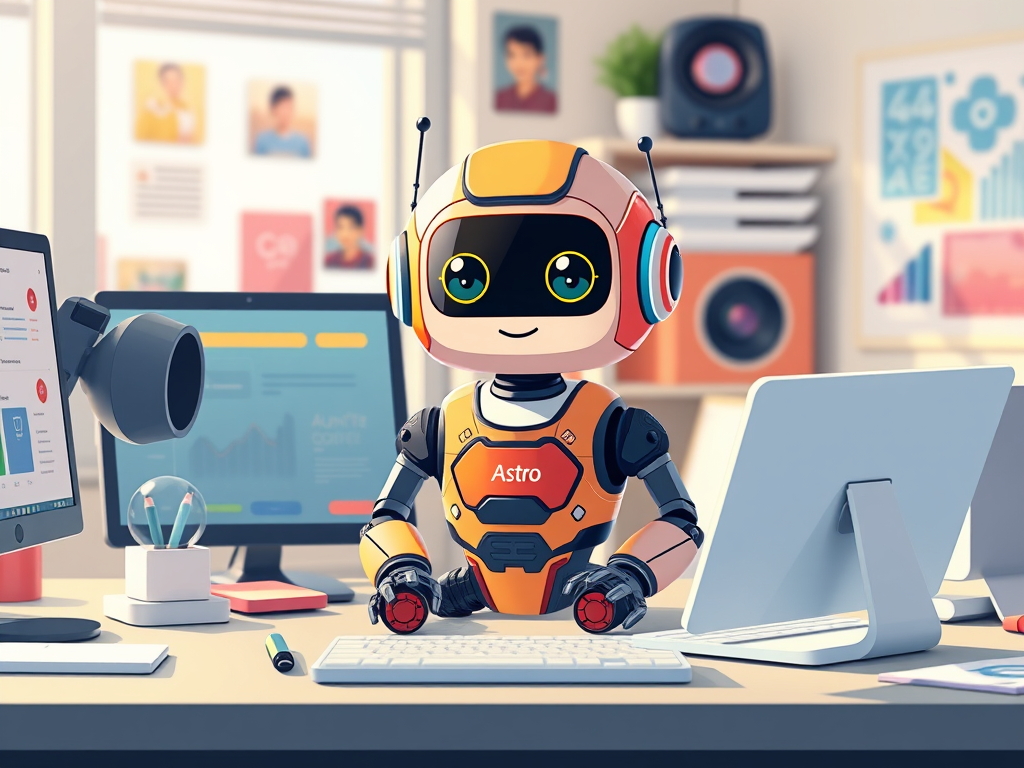
First, the system allows a user to provide a previously generated image as a direct reference for subsequent creations. This acts as a “visual fingerprint” that the AI can apply to new prompts. For instance, a user can generate a unique character—a small, friendly robot named “Astro”—and then use that initial image as a guide to place the same character in entirely new contexts, such as sitting at a desk or rendered in a different artistic style like a claymation model . This same principle applies to overarching artistic styles. A user can establish a specific visual aesthetic—for example, a “risograph print style”—and then use an image created in that style as a reference to ensure all future assets adhere to the same color palette, texture, and compositional rules . The prompt is no longer just a text instruction; it is a powerful combination of a textual command and a visual guide, creating a reliable method for maintaining character and brand integrity.
Second, for an even higher degree of technical control, the system provides access to the underlying gen_id and seed number for each image “. The gen_id is a unique identifier that allows for precise referencing of a specific image in the conversation history. The seed number is the initial value used in the pseudo-random generation process. By reusing the same seed number with a similar prompt, a user can produce images that are remarkably close to the original, controlling for the element of chance. This combination of a referenceable ID and a replicable seed acts as the “digital DNA” of a specific image. It moves the process from the realm of artistic approximation toward near-technical replication, providing a level of control essential for professional workflows where minute details matter.
Strategic Implications: From Standalone Images to Scalable Narratives
The ability to enforce visual consistency has profound, second-order consequences for businesses and content creators. It directly enables the scalable production of cohesive visual assets, which is the bedrock of all long-form narrative content and integrated marketing campaigns. A children’s book author can now generate all 30 illustrations for their story, ensuring the main character looks identical on every page. An animation studio can create detailed, consistent storyboards for an entire sequence, dramatically accelerating pre-production. A marketing team can design a multi-channel campaign featuring a consistent brand mascot across social media, web banners, and email newsletters.
This capability fundamentally alters the economics and logistics of narrative creation. Previously, producing a 10-panel comic strip would require hours or days of a skilled illustrator’s time to ensure character models were consistent from one panel to the next. Now, a creator can generate “Panel 1: Astro at his desk,” followed by “Panel 2: Astro walking in the park,” and maintain the visual integrity of the character throughout the sequence in a matter of minutes “. This was a critical barrier to the professional adoption of AI in narrative media, and its removal unlocks a vast new potential for storytelling.
The Emergence of a New Asset Class: Licensable AI Models and Style Kits
Looking further, the combination of reference images and seed numbers is poised to create an entirely new market for “digital visual assets.” A well-defined character or a unique brand style, once created and locked by a reference image and its associated seed number, becomes a valuable and replicable asset. This gives rise to a new business model for creators and agencies.
An independent artist could spend weeks perfecting a unique character design, then package the high-resolution base image, its gen_id, and a set of optimal seed numbers as a licensable “AI character model.” Other creators could then purchase this license to use the character in their own stories, with the guarantee of perfect consistency. Similarly, a branding agency could deliver a “Brand Style Kit” to a client that goes far beyond a traditional PDF guide. This kit would include a master “style reference image” and a set of seed numbers. The client could then use these assets in their own internal AI tools to generate any future marketing materials—from social media posts to internal presentations—with the absolute certainty that they are perfectly on-brand. This transforms the brand guide from a static document into a dynamic, generative tool. This creates a new, recurring revenue stream for creative professionals and a powerful new service offering for agencies, fundamentally altering the economics of how visual intellectual property is created, distributed, and monetized in the digital age.
The table below provides a clear analysis of the value proposition, contrasting traditional workflows with the new capabilities afforded by consistent AI image generation.
| Metric | Traditional Workflow | ChatGPT-4o Workflow | Strategic Impact |
| Brand Cohesion | High effort. Requires strict style guides, manual review, and skilled designers to maintain consistency across all assets. Prone to human error. | High efficiency. Consistency is programmatically enforced using reference images and seed numbers, ensuring near-perfect cohesion with minimal oversight. | Drastically reduces brand dilution and ensures a uniform customer experience across all visual touchpoints. Strengthens brand recognition and trust. |
| Production Time | Days to weeks. Involves hiring an illustrator, developing character sheets, and manually creating each new scene or asset. | Minutes to hours. Generate a base character/style, then generate new scenes with reference prompts in a single, continuous session “. | Enables real-time content creation in response to market trends. Reduces time-to-market for new products, campaigns, and narrative content by over 90%. |
| Cost Efficiency | High cost. Involves fees for illustrators, designers, and photographers for every new asset required. Licensing fees for recurring assets can be substantial. | Low cost. Primarily based on subscription fees. The marginal cost of generating an additional consistent asset is near zero. | Democratizes access to high-quality, consistent visual branding. Allows smaller businesses to compete with the visual output of larger enterprises. |
| Scalability | Limited. Scaling content production requires a linear increase in human resources and budget, creating a bottleneck for growth. | Extremely high. The ability to generate hundreds or thousands of consistent assets is limited only by processing time, not human labor. | Enables mass-personalization of visual content and the rapid expansion of content marketing efforts without a corresponding explosion in costs. This scalability is particularly valuable for AI-powered content creation in Sugar Land. |
| Storytelling Efficacy | High, but resource-intensive. The foundation of visual narratives like comics and storyboards, but requires significant artistic labor. | High, and resource-efficient. Unlocks the ability for individual creators or small teams to produce long-form visual narratives (e.g., graphic novels, animated shorts) that were previously unfeasible. | Opens new avenues for content marketing and entertainment, allowing brands and creators to engage audiences with richer, more complex stories. These capabilities align with modern strategic brand development approaches and can enhance local business growth strategies. |