
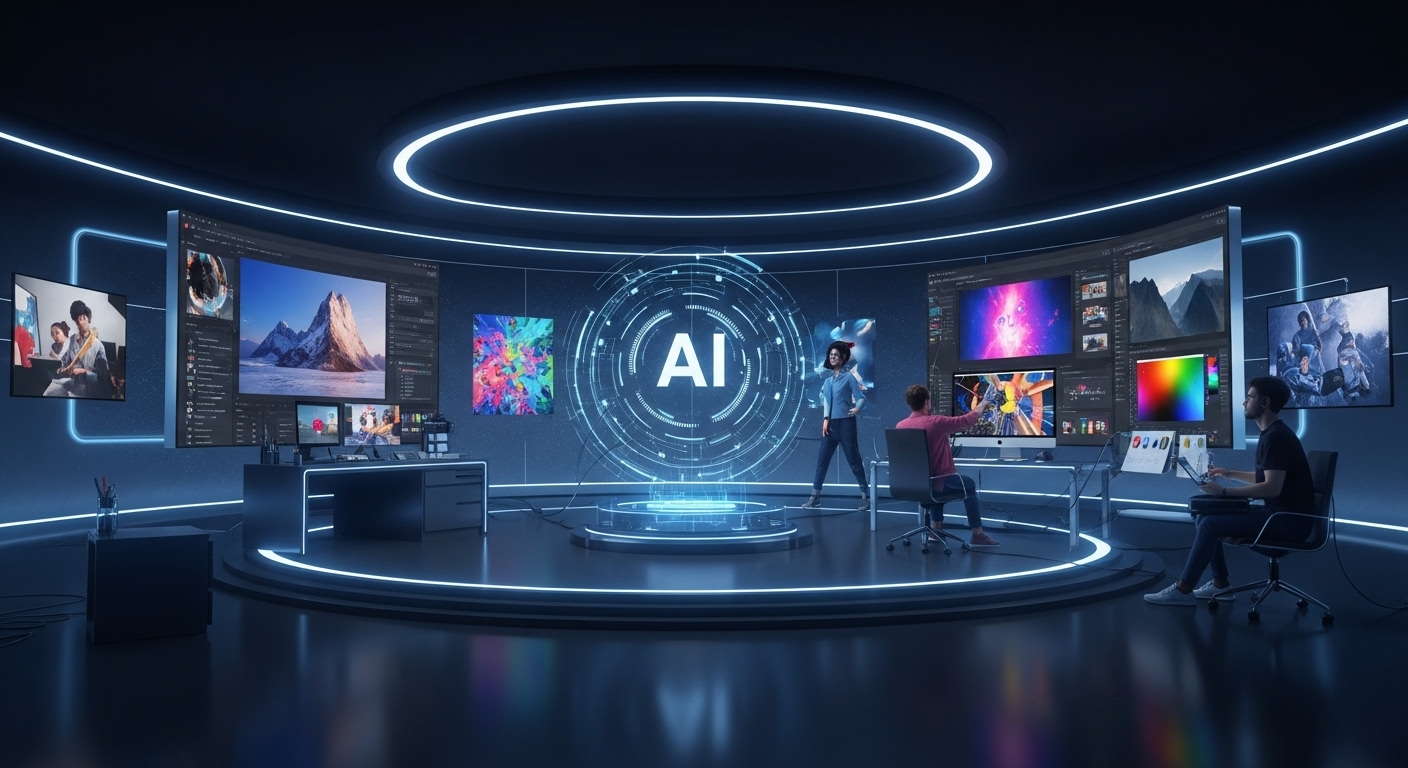
The New Paradigm of AI-Powered Visual Content
The landscape of digital content creation is undergoing a tectonic shift, moving beyond incremental improvements to embrace a fundamentally new operational paradigm. The latest advancements in generative artificial intelligence, particularly the multimodal and interactive capabilities now available, signal the end of AI as a static, single-output tool. We are entering an era where AI transitions from a simple generator to an interactive collaborator. This evolution marks a departure from the nascent “prompt-and-pray” model—where users submitted a text description and hoped for a usable result—to a sophisticated “prompt-generate-refine” loop. This new model empowers the user to assume the role of an active art director, engaging in a fluid, iterative dialogue with the AI to guide visual output toward a precise and intended goal.
At the heart of this transformation is the concept of “workflow collapse.” Historically, the creative process has been a series of discrete, often cumbersome stages: ideation, asset sourcing or creation, composition, typographic layout, retouching, and the generation of variations for testing. Each stage typically required different software, specialized skills, and significant time investment. The new generation of AI tools collapses these distinct phases into a single, conversational interface. The ability to generate a character, modify its expression, add elements to its environment, overlay perfectly rendered text, and then create multiple variations of the final composition within one continuous session represents an efficiency gain of an order of magnitude.
The economic implications of this shift are profound and far-reaching. On one hand, it heralds the democratization of high-quality visual production. Small businesses, startups, and individual creators can now access capabilities that were once the exclusive domain of large corporations with substantial creative budgets and dedicated design teams. This levels the playing field, allowing competition to be based more on the strength of creative ideas than on the depth of production resources. Organizations seeking to leverage the future of AI in digital content creation can gain significant competitive advantages. On the other hand, this same force presents a significant disruption to traditional content creation industries, including stock photography, graphic design services, and illustration agencies. Understanding the specific mechanics of this new paradigm is no longer an academic exercise; it is a strategic imperative for any organization that relies on visual communication to engage its audience and drive its business objectives. This transformation requires sophisticated visual consistency approaches in Sugar Land and comprehensive AI content refinement strategies. This report will provide an exhaustive analysis of these core capabilities, dissecting their operational benefits and outlining the strategic pathways for their integration into modern business and creative workflows.